
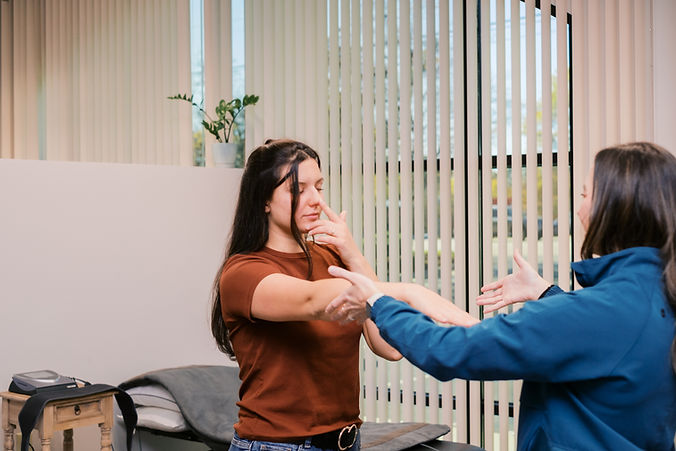
Functional Neurological Disorder (FND)
Functional Neurological Disorder (FND) is a condition in which the brain and nervous system are not functioning properly, even though standard imaging or lab work may not show a structural problem. Symptoms are real, often life-altering, and can affect movement, speech, sensation, balance, cognition, and more.
Research increasingly shows that FND is a disorder of nervous system functioning and brain network regulation, and that rehabilitation-based treatment can help many patients improve.
At Carolina Functional Neurology Center, we work to identify the areas of the nervous system that are not functioning well and build individualized treatment plans to help patients regain control, improve function, and move toward lasting recovery.
FND Symptoms May Include:
-
Non-epileptic seizure-like episodes
-
Tremors
-
Weakness
-
Episodes of paralysis
-
Difficulty walking
-
Balance issues
-
Dizziness
-
Speech difficulties
-
Trouble swallowing
-
Cognitive changes
-
Brain fog
-
Memory problems
-
Numbness or tingling
-
Vision changes
-
Hearing changes
-
Chronic pain
-
Headaches or migraines
-
Sensory overload
-
Fatigue
-
Coordination problems
FND Evaluation
At CFNC, our goal is to help patients with FND better understand why their symptoms are happening. FND is diagnosed based on positive clinical signs and patterns of nervous system dysfunction, not simply because testing is “normal.” Current evidence supports a rehabilitation-focused, multidisciplinary approach, especially when care is tailored to the individual’s symptom pattern and functional deficits.
We begin with a detailed history and a comprehensive neurological examination to look at how the brain is processing sensory input, producing movement, regulating balance, coordinating speech, and integrating information across multiple systems. Because no two FND cases look exactly the same, our focus is on identifying each patient’s unique pattern of dysfunction and building a treatment plan around it.
Diagnostic Testing FND
-
Functional Neurological Examination
-
Video-culography
-
Computerized Posturography
-
Eye Movement Testing
-
Neuro-Timing Evaluations
-
Balance and Gait Analysis
-
Autonomic / Orthostatic Evaluation
-
Sensory-Motor Integration Assessment
-
Cognitive Screening as Needed
-
Lab Work or Additional Referrals as Needed
FND Treatment
Treatment for FND is not one-size-fits-all. Research and clinical guidance support rehabilitation therapies that help retrain the brain and nervous system, improve function, and reduce symptom severity. Depending on the patient, treatment may include specialized physical rehabilitation, vestibular therapy, eye movement therapy, occupational strategies, autonomic retraining, and other non-invasive neurological rehabilitation methods.
At CFNC, treatment is based on your examination findings and symptom presentation. Our goal is to activate the right brain pathways through targeted, repetitive, individualized therapy that supports neuroplasticity or the brain’s ability to adapt and create healthier patterns over time. Neuroplasticity is a well-established principle of neurorehabilitation, and FND research increasingly frames the condition as involving functional brain-network disruption rather than permanent structural damage.
Common Treatment Methods for FND
-
Neurological Rehabilitation
-
Specialized Physical Therapy-Based Exercises
-
Vestibular Rehabilitation
-
Eye Movement Therapy
-
Balance and Gait Retraining
-
Sensory Integration Therapy
-
Autonomic Retraining
-
Speech / Cognitive Rehabilitation Strategies
-
Neuromodulation
-
Interactive Metronome / Timing-Based Training
-
Nutritional Counseling
-
Individualized Supplementation