


Dysautonomia Treatment Program
We work with our dysautonomia patients to find the root cause of their symptoms and help them get back to living normal, healthy lives! Our Dysautonomia Program is catered to the individual, not the diagnosis.
We combine all of our diagnostic and treatment modalities with our extensive knowledge and success working with dysautonomia patients. Going through our program will afford you the most up-to-date care and ensure that you are working with one of our doctors who specializes in dysautonomia.
Contact Us for More Information
Board-Certified Chiropractic Neurology

When it comes to your brain, experience matters. Our collaborative team of 9 Board-Certified Functional Neurologists brings over 70 years of collective experience to your recovery, providing the highest standard of care for complex concussions.
What is Dysautonomia?
Dysautonomia is the term used to describe a dysfunction of the autonomic nervous system. The autonomic nervous system regulates functions of your body that happen automatically, such as your heart rate, blood pressure, breathing, digestion, and temperature control. Since this system regulates a large portion of the body’s functions, a variety of symptoms can be felt when it’s not working properly. Symptoms include dizziness, fatigue, fainting, chronic pain, headaches, abnormal sweating, shakiness, breathlessness, nausea, vision issues and more. There are many types of dysautonomia, but the most common are postural orthostatic tachycardia syndrome (POTS), inappropriate sinus tachycardia, orthostatic hypotension and neurocardiogenic syncope.
POTS: POTS patients have tachycardia (or a fast heart rate) when standing, due to inadequate blood flow in their bodies. A comprehensive health history, physical examination and tilt table test are usually used to diagnose the syndrome. During the test, the patient lays flat on a table as their heart rate, oxygen levels, and blood pressure is monitored. The table is then tilted up slowly. Normally your heart rate should increase by around 0-10 beats per minute as your body adjusts to standing up. For adults, if your heart rate increases by more than 30 beats than you’re diagnosed with POTS. For children and adolescents, the heart rate would increase by more than 40 beats per minute.
Inappropriate Sinus Tachycardia: IST is diagnosed when a patient’s resting heart rate is over 100 beats per minute with an average 24-hour heart rate over 90 beats per minute.
Orthostatic Hypotension: If your blood pressure drops against gravity that is known as orthostatic hypotension. If your systolic, or the top number in your blood pressure, drops more than 20 mmHg or if the diastolic, the bottom number, drops more than 10 mmHg then you meet the criteria to be diagnosed with orthostatic hypotension.
Neurocardiogenic Syncope: Neurocardiogenic syncope (also known as vasovagal syncope) occurs when your heart rate and blood pressure drop and cause you to faint. This could be mild to severe in nature and may cause further issues, such as concussions, which are common among people with neurocardiogenic syncope. A tilt table test is also used in the diagnosis of neurocardiogenic syncope.
Dysautonomia Evaluation and Treatment
Dysautonomia patients are most-typically found to have disruption in the communication between the central nervous system (CNS) and the cardiovascular system. If there is nothing structurally wrong with the heart or cardiovascular system, then the issue lies within the CNS.
At CFNC, our goal is to help our dysautonomia patients understand where in the CNS that dysfunction is coming from. The majority of POTS patients have dysfunction of the brainstem regions either in the midbrain or the pontomedullary areas of the brain. We also see cortical dysfunction that causes similar symptomatology. Our job as CFNC providers is to pinpoint the direct area of dysfunction and apply therapies to improve its functionality through neuroplasticity.
We know that once we locate the dysfunction in the brain, it is only a matter of time and repetition before the neuroplasticity that is created yields long lasting changes in symptoms and functionality. Dysautonomia treatment may include tilt table therapy, neuromodulation to activate different cranial nerves through sensory stimulation (such as the vagus nerve), eye movement exercises, vestibular rehabilitation, interactive metronome, nutritional counseling, cognitive exercises and more.
Through neurological rehabilitation, we are able to correct dysfunctions of the nervous system to greatly decrease or eliminate symptoms. Our goal is to find the root cause of your symptoms and create positive changes in the brain, leaving you with little to no symptoms and back to living a normal, healthy life.
Testing and Treatment for Dysautonomia
Orthostatic Autonomic Evaluation
Video-culography
Blood Work
Computerized Posturography
Neuro-Timing Evaluations
Other Lab Work as Needed
Tilt Table Therapy
Orthostatic Retraining
Neurological Rehabilitation
Neuromodulation
Eye Movement Therapy
Peripheral Nerve Stimulation
Nutritional Counseling
Individualized Supplementation
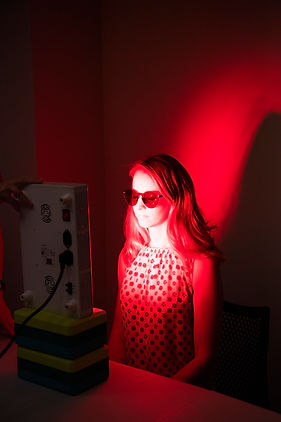
Red Light Therapy
Bemer Therapy
Chiropractic Adjustments
Find the CFNC Location Nearest You
Every office is staffed by our board-certified team and independently rated by real patients on Google.
What Our Patients Say
I went to CFNC for postural orthostatic tachycardia syndrome (POTS) treatment. After going to close to a dozen doctors searching for answers, I was so relieved to find Dr. Brindisi. She truly listened to me and was very knowledgeable on POTS. After a few months of treatment, I am feeling SO much better! My heart rate is more stable and does not increase drastically when I stand up; my shakiness and unsteadiness are gone; my energy levels are much better; and my back, neck and jaw pain has significantly decreased. It is truly amazing and I’m so thankful that a holistic form of treatment exists for this syndrome. I am so incredibly grateful for Carolina Functional Neurology Center and I cannot recommend them enough for dysautonomia treatment.
Frequently Asked Questions
What are the different types of dysautonomia?
There are many conditions that fall under the dysautonomia umbrella term. In today's post you can see examples of a different kinds of dysautonomia. All conditions have very specific criteria that a patient must meet in order to obtain a diagnosis. Below are more details on each condition:
Postural orthostatic tachycardia syndrome - heart rate increase greater than or equal to 30 beats per minute(adults) or 40 beats per minute (adolescents) from supine to standing, sustained over 100 bpm within 10 minutes, absence orthostatic hypotension.
Inappropriate sinus tachycardia - resting heart rate is over 100 beats per minute or an average 24-hour heart rate over 90 beats per minute. In the absence of any cardiac cause for the tachycardia.
Vasovagal syncope - heart rate and blood pressure drop and cause syncopal episodes
Orthostatic hypotension - blood pressure drops against gravity 20 mm Hg systolic and 10 mm Hg diastolic within two to five minutes of standing
Autoimmune dysautonomia - autoantibody panel includes ANNA-1, CASPR2 Ab, DPPX Ab, Ganglionic AChR Ab, LGI Ab - results interpreted in clinical context for each patient
Multiple system atrophy - urinary incontinence or orthostatic decrease of blood pressure within three minutes of standing by at least 30 mm HG systolic or 15 mm Hg diastolic, additional symptoms
Pure autonomic failure - diagnosis of exclusion, fall in blood pressure standing, norepinephrine levels reduced, widespread autonomic findings
Autonomic dysfunction - dysfunction in the autonomic nervous system, does not meet criteria for diagnosis
What is dysautonomia?
Dysautonomia is the term used to describe a dysfunction of the autonomic nervous system. The autonomic nervous system regulates functions of your body that happen automatically, such as your heart rate, blood pressure, breathing, digestion, and temperature control. Since this system regulates a large portion of the body’s functions, a variety of symptoms can be felt when it’s not working properly. Physical symptoms include dizziness, fatigue, fainting, chronic pain, headaches, abnormal sweating, shakiness, breathlessness, nausea, vision issues and more. There are many types of dysautonomia, but the most common are postural orthostatic tachycardia syndrome (POTS), orthostatic hypotension, inappropriate sinus tachycardia and neurocardiogenic (vasovagal) syncope.
How are dysautonomia patients evaluated?
Dysautonomia patients are most-typically found to have disruption in the communication between the central nervous system (CNS) and the cardiovascular system. Our brains are what control our ability to shunt blood appropriately to the brain and body. If there is nothing structurally wrong with the heart or cardiovascular system, then the issue lies within the CNS. At Carolina Functional Neurology Center, our goal is to help our dysautonomia patients understand where in the CNS that dysfunction is coming from. We use a variety of tests to pinpoint the direct area of dysfunction and then apply therapies to improve its functionality through neuroplasticity. We know that once we locate the dysfunction in the brain, it is only a matter of time and repetition before the neuroplasticity that is created yields long lasting changes in symptoms and functionality. While there is no cure for dysautonomia, we help our patients have a more functional, less symptomatic life!
What causes dysautonomia?
Dysautonomia has many possible causes including viruses, concussions, hormonal changes, surgery and anesthesia, vaccinations, autoimmune disease, Ehlers-Danlos Syndrome, Mast Cell Activation Syndrome, mold toxicity, physical and mental trauma, genetics and more. Sometimes it is easy to pinpoint an exact cause. For example, if you develop dysautonomia after receiving a concussion. Other times, however, it is not as clear.
What are dysautonomia symptoms?
The autonomic nervous system regulates a very large portion of the body’s functions. When it’s not working properly, a variety of symptoms can be felt. Physical symptoms of dysautonomia (dysfunction or the autonomic nervous system) include heart rate and blood pressure irregularities, dizziness, fatigue, fainting, chronic pain, headaches, abnormal sweating, shakiness, breathlessness, nausea, vision issues, anxiety and more. Many people experience all of these symptoms, while others only have a few.
Dysautonomia Patient Stories


A 35 year-old female presented with autonomic dysfunction. Her chief complaints were brain fog, dizziness, migraines, anxiety, gastrointestinal issues, sleep disturbances and neck pain.
A 13-year-old male presented with vasovagal syncope. Symptoms included drop attacks, pre-syncope, fatigue, headaches, and anxiety.
A 55 year-old male presented with constant head pressure, brain fog, headaches, chronic sinus infections, lung nodules, daily productive cough, dizziness, tinnitus and memory decline for the last 10 years.
A 19 year-old female was diagnosed with POTS and Ehlers Danlos Syndrome. She had been wheelchair bound for nearly 3 years due to severe joint pain, vertigo and dizziness making her unable to walk without falling.
About CFNC
Carolina Functional Neurology Center provides holistic treatment for a variety of neurological conditions, including dysautonomia, vertigo, migraine, concussion, neurodevelopment disorders and movement disorders.
Our priority is to listen to you. We care about your health, the symptoms you’re experiencing and the journey you have been on. We seek to find the root cause of your health condition by exploring how your symptoms are connected to your brain and nervous system. We customize our treatment approach based on your specific needs.
We have offices in North Carolina, Maine and Florida. If you are not local, we offer intensive treatment programs at all of our locations. Schedule a consultation with one of our doctors to learn more about what treatment may look like for you.


Contact Us
Contact us for more information or to schedule a virtual consultation at one of our offices in Florida, Maine or North Carolina.

© 2025 by Carolina Functional Neurology Center